How to Make Jollof Rice: An Easy Step-by-Step Recipe
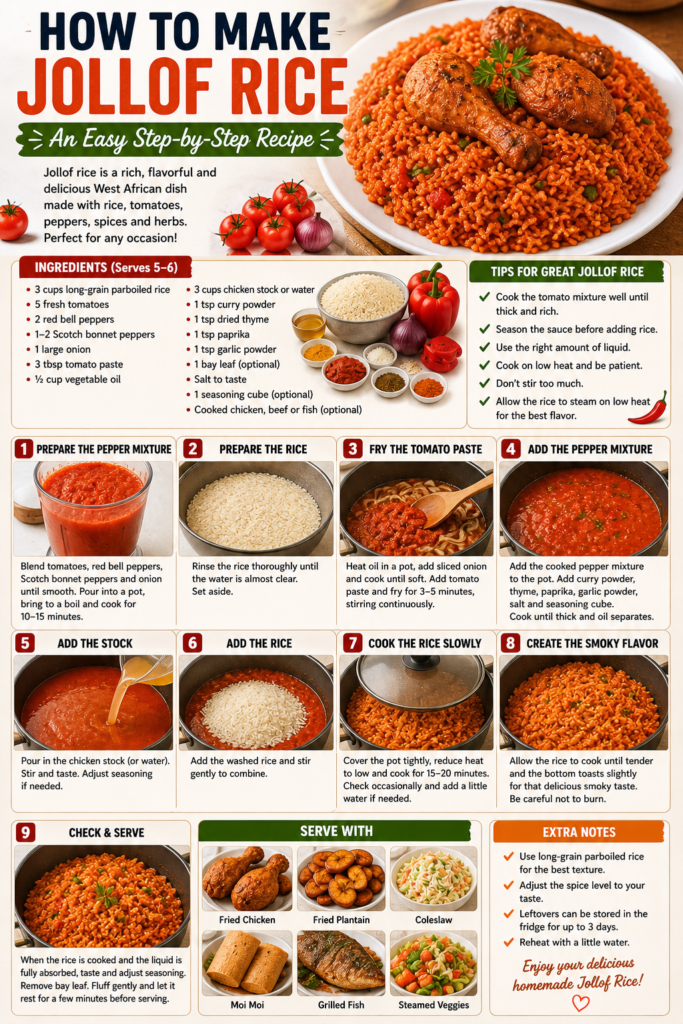
Jollof rice is one of the most popular West African dishes, and in Nigeria, it is a favorite at family dinners, parties, celebrations, and everyday meals. Its rich color, smoky aroma, and bold tomato-and-pepper flavor make it a dish that is hard to resist.
Although there are different ways to prepare jollof rice, you don’t need to be an expert cook to make a delicious pot at home. With the right ingredients and a few simple techniques, you can prepare flavorful jollof rice that your whole family will enjoy.
This easy step-by-step recipe will show you how.
Ingredients You Will Need
For about 5–6 servings, you’ll need:
- 3 cups long-grain parboiled rice
- 5 fresh tomatoes
- 2 red bell peppers
- 1–2 Scotch bonnet peppers
- 1 large onion
- 3 tablespoons tomato paste
- ½ cup vegetable oil
- 3 cups chicken stock or water
- 1 teaspoon curry powder
- 1 teaspoon dried thyme
- 1 teaspoon paprika
- 1 teaspoon garlic powder
- 1 bay leaf, optional
- Salt to taste
- 1 seasoning cube, optional
- Cooked chicken, beef, or fish, optional
You can adjust the amount of pepper depending on how spicy you like your food.
Step 1: Prepare the Pepper and Tomato Mixture
The tomato and pepper base is one of the most important parts of good jollof rice.
Wash the tomatoes, red bell peppers, Scotch bonnet peppers, and onion.
Cut them into smaller pieces and place them in a blender.
Blend until smooth.
If your blender requires liquid, add a small amount of water. Avoid adding too much because you want the sauce to become thick during cooking.
Pour the blended mixture into a pot.
Bring it to a boil and cook for about 10–15 minutes.
This helps reduce some of the water before you add it to the main jollof sauce.
Tip: Red bell peppers add sweetness and color, while Scotch bonnet peppers provide heat. You can reduce the Scotch bonnet peppers if you prefer mild jollof rice.
Step 2: Prepare the Rice
While the pepper mixture is cooking, rinse the rice thoroughly.
Place the rice in a bowl and wash it several times until the water becomes relatively clear.
You don’t want to remove every bit of starch, but washing the rice helps prevent the finished dish from becoming excessively sticky.
Set the cleaned rice aside.
Step 3: Fry the Tomato Paste
Heat the vegetable oil in a large, heavy-bottomed pot over medium heat.
Add finely sliced onions and cook for a few minutes until they become soft.
Add the tomato paste.
Stir continuously and allow the tomato paste to fry for several minutes.
This step is important because frying the tomato paste helps develop a deeper flavor and removes some of its raw taste.
Be careful not to burn it.
Step 4: Add the Pepper Mixture
Pour the cooked tomato and pepper mixture into the pot.
Stir thoroughly.
Season with curry powder, thyme, paprika, garlic powder, and salt.
Add a seasoning cube if you use one.
Allow the sauce to cook over medium heat.
This is where patience becomes important.
Let the sauce simmer until it becomes noticeably thicker and the oil begins to separate slightly from the tomato mixture.
The longer the sauce cooks properly, the richer the flavor will usually become.
Step 5: Add the Stock
Pour in the chicken stock.
If you don’t have chicken stock, you can use water.
Taste the sauce before adding the rice.
This is an important step because the sauce should taste well-seasoned before the rice goes in.
If it tastes bland at this stage, the finished rice may also taste bland.
Adjust the salt and seasonings as needed.
Step 6: Add the Rice
Add the washed rice to the tomato sauce.
Stir gently until the rice is evenly distributed throughout the sauce.
The liquid should be enough to cook the rice without making it excessively watery.
If necessary, add a little more stock or water.
Cover the pot tightly with aluminum foil or a suitable lid.
Reduce the heat to low.
Allow the rice to cook gently.
Step 7: Cook the Rice Slowly
This is one of the secrets to good jollof rice.
Avoid cooking it over very high heat.
High heat can cause the bottom of the rice to burn while the top remains undercooked.
Instead, use low to medium-low heat and allow the steam inside the covered pot to cook the rice.
After about 15–20 minutes, check the rice.
If it is still firm and the pot looks dry, add a small amount of water or stock.
Cover it again and continue cooking.
Try not to stir the rice too frequently.
Too much stirring can make it mushy.
Step 8: Create the Smoky Flavor
Many people love the slightly smoky taste associated with Nigerian party-style jollof rice.
You can develop this flavor by allowing the rice to cook gently toward the end until the bottom layer begins to toast slightly.
However, be careful.
There’s a difference between smoky flavor and burnt rice.
Keep the heat low and monitor the pot carefully.
If you notice a strong burnt smell, immediately move the rice to another pot without scraping the burned layer from the bottom.
Step 9: Check the Rice
Once the rice is tender, taste it.
The grains should be cooked but not completely mushy.
If necessary, add a little more seasoning.
You can also add a small amount of butter near the end for extra richness, although this is completely optional.
Remove the bay leaf if you used one.
Turn off the heat and allow the rice to rest for a few minutes before serving.
What Can You Serve With Jollof Rice?
Jollof rice can be served on its own, but adding a side dish can turn it into an even more satisfying meal.
Popular options include:
- Fried chicken
- Grilled chicken
- Fried fish
- Grilled beef
- Fried plantain
- Coleslaw
- Steamed vegetables
- Moi moi
- Nigerian salad
For a simple family dinner, jollof rice with fried plantain and chicken is a delicious combination.
Tips for Making Great Jollof Rice
1. Don’t rush the sauce
The tomato and pepper mixture needs enough cooking time to develop flavor.
2. Don’t add too much water
Too much liquid can make the rice soft and mushy.
Add liquid gradually if necessary.
3. Season the sauce before adding rice
Rice absorbs a lot of flavor, so the cooking sauce should taste well-seasoned.
4. Cook on low heat
Gentle cooking helps the rice cook evenly and reduces the risk of burning.
5. Avoid constant stirring
Stirring too much can break the grains and create a mushy texture.
6. Use good-quality rice
Long-grain parboiled rice is commonly used because it can hold its shape during cooking.
7. Adjust the pepper
Not everyone enjoys very spicy food. Start with a smaller amount of Scotch bonnet pepper if you’re unsure.
Common Jollof Rice Mistakes
One common mistake is adding the rice before the tomato sauce has cooked properly. This can leave the finished dish with a raw or overly acidic tomato flavor.
Another mistake is adding too much water at the beginning. It’s easier to add a little more liquid later than to fix rice that has become overly soft.
Some cooks also use very high heat because they want the rice to cook quickly. Unfortunately, this can burn the bottom before the rest of the rice is ready.
Finally, don’t forget to taste as you cook. Adjusting the seasoning along the way makes it much easier to get the flavor you want.
How to Store Leftover Jollof Rice
If you have leftovers, allow the rice to cool properly before storing it.
Place it in a clean, covered container and refrigerate it promptly.
When reheating, make sure the rice is heated thoroughly before eating.
You can also transform leftover jollof rice into a quick lunch by serving it with eggs, chicken, vegetables, or fried plantain.
Final Thoughts
Making Nigerian jollof rice at home may seem intimidating at first, but the process becomes much easier once you understand the basic steps.
The key is to build flavor gradually: prepare a good pepper and tomato mixture, fry the tomato paste properly, season the sauce well, add the rice carefully, and allow everything to cook slowly.
Don’t worry if your first pot isn’t perfect. Like many traditional dishes, jollof rice gets better with practice.
Once you find the balance of tomato, pepper, seasoning, stock, and cooking time that works for you, you’ll be able to make a delicious pot whenever you’re craving a comforting Nigerian meal.